Day 1
Overnight flight
Fly to Guangzhou and keep the arrival morning flexible.
Planned itinerary · China & Thailand
From the harbours of southern China to the mountains of northern Thailand and the temples of Bangkok.
City walks, ambitious day trips and slower afternoons. Allow extra time on transfer days.
Start gently on leafy Shamian, then spend one day on the modern skyline and another in Liwan, where the old canals, workshops and Cantonese opera tell a different story.
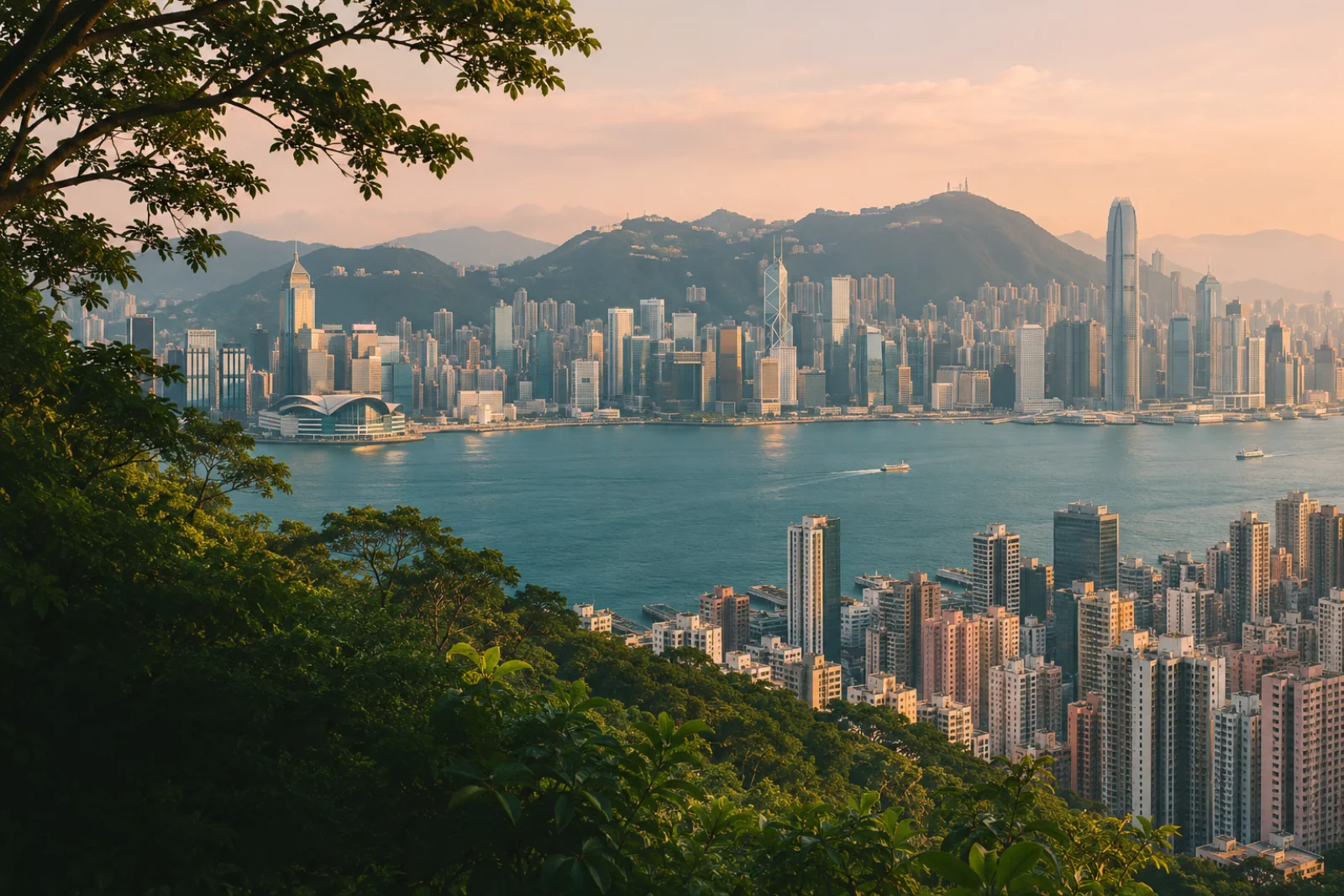
Give Hong Kong three distinct experiences: the harbour at dusk, a day on Lantau and an urban walk from the Peak down into Central and Sheung Wan. Swap the outdoor days around the weather.
Stay inside the old walls for the temple walks and save the longer drives for Doi Suthep and Doi Inthanon. Alternate full days outdoors with time to rest in town.
Use Mae Chan as a quieter base. Give one day to the art and temples around Chiang Rai, then make a more compact trip to Chiang Saen and the Mekong.
Leave the arrival evening free. One full day is enough to pair the royal precinct and Wat Pho, then choose between the riverfront and a quieter afternoon around Lumphini.
Choose a stop to see its places and where to stay.
The basemap is unavailable. You can still select route markers and open the place cards.
Transfer lines are schematic. Markers show approximate locations.
Follow the sequence or jump straight to a stop.
Fly to Guangzhou and keep the arrival morning flexible.
Rest after arrival, then stroll past the old houses and cafés of Shamian if you have the energy.
Walk Huacheng Square and see the Opera House. Choose Canton Tower or the river cruise depending on visibility.
Visit the Chen Clan Academy, have Cantonese lunch in Xiguan and walk through Yongqingfang.
Travel to West Kowloon and leave the evening for the waterfront and Star Ferry.
Morning: Ngong Ping cable car, Big Buddha and Po Lin. Afternoon: Tai O village. Check the connecting bus before choosing a lunch stop. In poor weather, switch to a city day around Central and Tai Kwun.
Start at Victoria Peak, then walk through Central and Sheung Wan. Swap with Lantau if the forecast favours it.
Leave the arrival evening free for dinner and rest.
Visit Wat Chedi Luang and Wat Phra Singh. Try khao soi at lunch and go up to Doi Suthep in the afternoon.
Choose an observation-based programme. Keep the afternoon open.
Allow a full day for the summit, Ang Ka trail and Wachirathan waterfall.
Travel by road from Chiang Mai and leave the afternoon at the camp.
Consider the White Temple, Blue Temple and Baan Dam. A driver or guide can help connect the stops.
Visit Chiang Saen and the Golden Triangle viewpoint. The Hall of Opium is optional.
Transfer from Chiang Rai and keep the evening free.
Visit the Grand Palace and Wat Pho in the morning. Spend the afternoon around Lumphini or take a break.
37 places and stops · What to see and how each fits into the day.
A river island with tree-lined streets, old consular buildings and a short stretch of waterfront.
Leave this walk optional after a night flight.
A long pedestrian axis through Zhujiang New Town with views of the towers across the Pearl River.
Pair it with the Opera House and museum on foot.
Zaha Hadid’s angular riverside opera house makes a striking contrast with the office towers around it.
The exterior is enough for this walk. Check the programme separately if you want to go inside.
Regional history, art and natural history in a compact stop near the square.
Choose one or two collections and check admission requirements before the trip.
A landmark on the opposite bank and an evening viewpoint when the sky is clear.
Choose the tower or a river cruise according to visibility and energy.
A courtyard complex where elaborate carved roofs and ceramics introduce the crafts of Lingnan.
Start here before lunch in Xiguan.
Waterfront paths, bridges and old lanes give an easy introduction to the former merchant quarter.
Continue towards Enning Road and Yongqingfang on foot.
Reused traditional buildings, little lanes and street-level shops on a compact stretch of old Guangzhou.
Leave room to wander between the canal and the opera museum.
A garden-and-courtyard setting for costumes, stage traditions and the history of Cantonese opera.
Pair it with the Yongqingfang walk and check entry arrangements.
The crossing to Central gives a low-effort skyline view between the Kowloon promenade and Hong Kong Island.
Start with the promenade and keep the evening short on the train day.
The cable car links Tung Chung with the Ngong Ping plateau, with open views on a clear day.
Allow for queues, maintenance and wind. Check the bus alternative before setting out.
The bronze figure above Ngong Ping gives the plateau its unmistakable silhouette. The base area is worth seeing even if you skip the stairs.
Visit with Po Lin before continuing to Tai O.
Temple halls and incense courtyards sit just across the plateau from the Big Buddha.
If you eat here, plan lunch around the bus onward.
A fishing village with stilt houses and lanes selling dried seafood. Much of the visit is simply walking by the water.
Check the return bus before staying for dinner. Treat boat rides as weather-dependent.
Walk part of the ridge for views over towers, harbour and surrounding hills.
Go early in clear weather. Consider a lower-altitude day if the ridge is in cloud.
A small temple in Sheung Wan known for its suspended incense coils and intimate interior.
Combine with the old lanes and shopfronts around Hollywood Road.
Historic police and prison buildings now surround public courtyards and exhibition spaces.
A good urban fallback if Lantau is too windy or wet.
Former police housing now contains design studios, little shops and courtyards.
Choose PMQ or Tai Kwun depending on interest and time.
The massive brick chedi anchors an active temple compound in the old city.
Walk from the old-town base and combine with Wat Phra Singh.
A complex of Lanna halls and gilded roofs at the west end of the old town.
Give the two old-town temples the morning and leave the afternoon for the hill.
A hilltop temple with a golden chedi and views back towards Chiang Mai.
Arrange transport back down if visiting near sunset.
A half-day option focused on watching elephants and learning about their care.
The venue has yet to be chosen. Look for observation without riding, shows or forced bathing.
A short forest boardwalk close to the summit brings you into a cooler, mistier landscape.
Bring a layer and leave time for the drive and park stops.
Two pagodas and landscaped gardens on the slopes of Doi Inthanon.
Add them between the summit and the waterfall if cloud and timing allow.
A broad cascade and a dramatic change of scenery on the drive back down the mountain.
Expect spray and wear shoes that grip on wet surfaces.
A contemporary temple complex whose white plaster and mirror details catch the light.
Treat it as a main stop and leave flexibility for the remaining temples.
A vivid blue sanctuary with painted surfaces and a contrasting white Buddha.
Pair with a lunch stop in Chiang Rai before crossing town.
A hill complex dominated by a large white Guanyin figure overlooking the outskirts.
Keep this as a flexible add-on if the main art stops take longer.
Dark timber buildings showcase the distinctive art and collections of Thawan Duchanee.
Allow unhurried time for the buildings and exhibits.
Ruined walls and a historic chedi mark the former riverside city.
Start here before following the river north to Sop Ruak.
From Sop Ruak, look out over the confluence of the Ruak and Mekong rivers from the Thai side.
Pair the stop with lunch nearby. The route stays on the Thai side.
A history museum covering the regional opium trade and its human consequences.
Optional after the viewpoint. Confirm opening hours before the drive.
This is the planned airport for the domestic arrival from Chiang Rai.
Check the ticket before arranging the transfer. The international departure uses a different airport in this plan.
Royal courtyards and the Temple of the Emerald Buddha make this the central stop of the old-town morning.
Start early and bring clothing that suits the dress requirements.
The Reclining Buddha is the highlight, with tiled chedis and courtyards around it.
Walk here from the palace and decide whether to stay by the river for lunch.
A shaded city park and a change of pace after the palace district.
Keep it optional if you prefer an afternoon on the river.
The planned airport for the homebound international flight.
Use the airport code when booking a transfer and allow for traffic.
Guangzhou · 3 nights
Oakwood Premier Guangzhou is a reference for an apartment-style stay in Tianhe. Ask about early check-in after an overnight flight.
Hong Kong · 3 nights
Royal Plaza Hotel in Mong Kok is a reference for this stop. Allow time for border formalities on the train from Guangzhou.
Chiang Mai · 4 nights
El Barrio Lanna is a reference for staying inside the old town.
Mae Chan / Chiang Rai · 3 nights
Tantawan Tented Camp is an example of making the stay itself part of the trip.
Bangkok · 2 nights
SO/ Bangkok is a reference near Lumphini Park. Check which airport each flight uses.
A shortlist that fits the route. Check hours and reservations before you go.
High-speed train. Leave enough time for departure formalities and confirm the station on your ticket.
Allow for the airport transfer and leave the arrival evening free.
Plan roughly half a day by road with breaks, then stay at the camp.
The domestic arrival in the plan is at Don Mueang (DMK). Departure home is from Suvarnabhumi (BKK).
The original plan estimated lodging at roughly €4,000 for four people across 15 nights (November 2026). Flights, ground transport, meals and activities are separate. This is a planning reference, and rates vary by date.
The cover image is a generated illustration.